
Content:
Sunreturn
« Qu'est-ce que le soleil ? Une lumière que, faute de mieux, je ne peux appeler que jaune, jaune soufre pâle, jaune citron. Que c'est beau le jaune. » Vincent Van Gogh
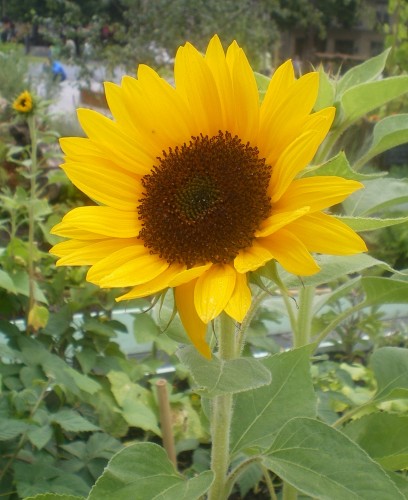 "Sun" makes us think of holidays and having fun outdoors.
For the French the sun rises over Alsace and Lorraine in the east,
and sets over Brittany in the west.
It doesn’t shine the same way across the whole country.
As we know, it prefers the south and sometimes takes a while
to show its face north of the Loire, the longest river in France.
France lies half way between the North Pole and the equator
and it has a temperate climate.
The summer months of June, July and August are as sunny as a tourist could wish. The temperature can be over 30°C. When this happens for several days without a single drop of rain, people start talking about a heat wave and a risk of drought. The best holidays are sunny ones.
With September and October come autumn colours. The “Indian summer” in France brings mild days and cool evenings.
Winter is cold and snowy in high areas. But on the coast the weather tends to be mild and damp with a few cold spells in January and February, before the return of spring on March 21st.
In Marseilles, they have a famous cold north wind called the "Mistral". It blows down the Rhône Valley but the weathercocks still know their north from their south.
What is meant by “la bise” ? When it’s a kiss on the cheek it’s a sign of friendship or affection. Much more unpleasantly, it can sometimes also be a freezing cold dry wind which comes from the north in winter.
 Before there were weather forecasts, farmers and sailors would predict the weather from the signs of nature: the way swallows fly or the way frogs jump can tell you whether an umbrella is likely to be useful. It doesn’t always work!
If you hear someone say " Il fait la pluie et le beau temps " , it doesn’t mean that the person they’re talking about is a magician, but that this person is very influential.
« Soleil, the word that makes the world go round! » Evi