
Content:
Napoleon
« What’s it like living in a country where there are so many famous people? »
« What happened at Trafalgar? »
Napoleon Bonaparte was born in Corsica and in 1789 was 20 years old. As a consul of the French Republic, he went on to modernize a country which had been turned upside down by the French Revolution.
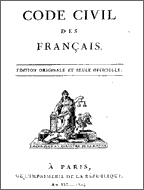 Laws were laid down in a big book called "le code civil", also known as "le code Napoléon", and the civil service was reorganized. He was also responsible for the creation of the French Bank (“Banque de France”), secondary schools (“les lycées”), and the school leaving examination called “le baccalauréat”.
In 1804 Napoleon was crowned emperor in Notre-Dame in Paris. He wanted to rule Europe and waged war on every front: in Italy, Egypt, and Russia. After many great victories came defeat. He was beaten by the English Admiral Nelson in the naval battle of Trafalgar, then in Belgium in 1815 by Wellington’s army at Waterloo.
Napoleon died as a prisoner of the English on the island of St Helena in 1821.
Although his empire fell apart, Napoleon has always been a legendary figure.
In 1994 Waterloo station , in London, marked the success of a different grand project, a human and technological victory achieved this time by the English and French working together: it became the first London terminus for the Eurostar, the train which runs through the Channel Tunnel. Since 14 November 2007, the new terminal for Eurostar is St Pancras International.
"Coup de Trafalgar" is an expression the French use when they think they may suffer a disastrous defeat.